Winter Sunsets.
Location planning and reading the conditions.

Hi, I’m Christiaan, I’m primarily a coastal landscape photographer, but along the way have had experience of portraiture, macro, social documentary and aerial photography. An interest that developed later in life led to an HND and then a first class honours degree. My passion is photographing the East Anglian coast, usually using long exposures, and also an affinity to the varied coastline of Northumberland. I also use my photography as a form of mindfulness therapy, and researched this in some depth as my degree dissertation. Here, I am sharing my experiences over the years, how I make my images, what they mean to me, diversity of styles and the therapeutic processes. I hope you enjoy reading about my photographic journey.
WINTER SUNSETS.
Exploring locations, reading the conditions.
Returning to some of my favourite locations has been a theme of my blog for the past few weeks, and this week is no exception. The East Anglian coast faces mainly eastwards or northwards, making for great sunrise images, but there is a short segment of Norfolk which faces west, bringing the opportunity for some spectacular sunset shoots. Those who are familiar with the area will know that the landscape is relatively flat with few undulations. There aren’t many hills and no waterfalls of note, and so the photographer has their work cut out to place something against the skyline. However, we do get some spectacular skies, and when the conditions are right it can make an image really stand out. With the South Lincolnshire landscape also being mainly fenland, the sun sets low over the land, with golden light illuminating the West Norfolk coastline.
Reading the weather conditions and planning the right time to visit a location are critical to the success of your final images. Of course, you can only plan so far, and sometimes what promises to be a good day doesn’t always turn out that way. In planning for a winter shoot, you also have to make sure that you have the right clothing, provisions, cash and know where to find open “facilities,” as many on the coast are seasonal! I mention cash here, though everywhere is almost cashless, because despite downloading every single parking app, they only work if you have adequate phone signal!
This was the case on my trip over to Snettisham, though I had planned where to park, what time to go and checked the tide times. An early December day, started with a rare frost, a chill in the air, but clearing blue skies. Heading out at lunchtime, an hour and a half’s drive lay in front of me, stopping just before King’s Lynn to refuel the car and make use of the facilities. Driving up the coast road here is often busy, but I made plenty of time and turned off the main road to head towards the beach, also known as Shepherd’s Port. There is an RSPB reserve here, though I had aimed for the beach car park at the end of the road. There is a holiday park here too, but in winter is predictably deserted, and the cafes and shop all closed. Pulling up in the car park, lunch at the ready, I had downloaded the correct app to pay, then realised I had absolutely no phone signal. I was then scrapping around to find the full £6 parking fee in change! Despite being off season, the parking charges here are not reduced, and luckily I did have enough change!
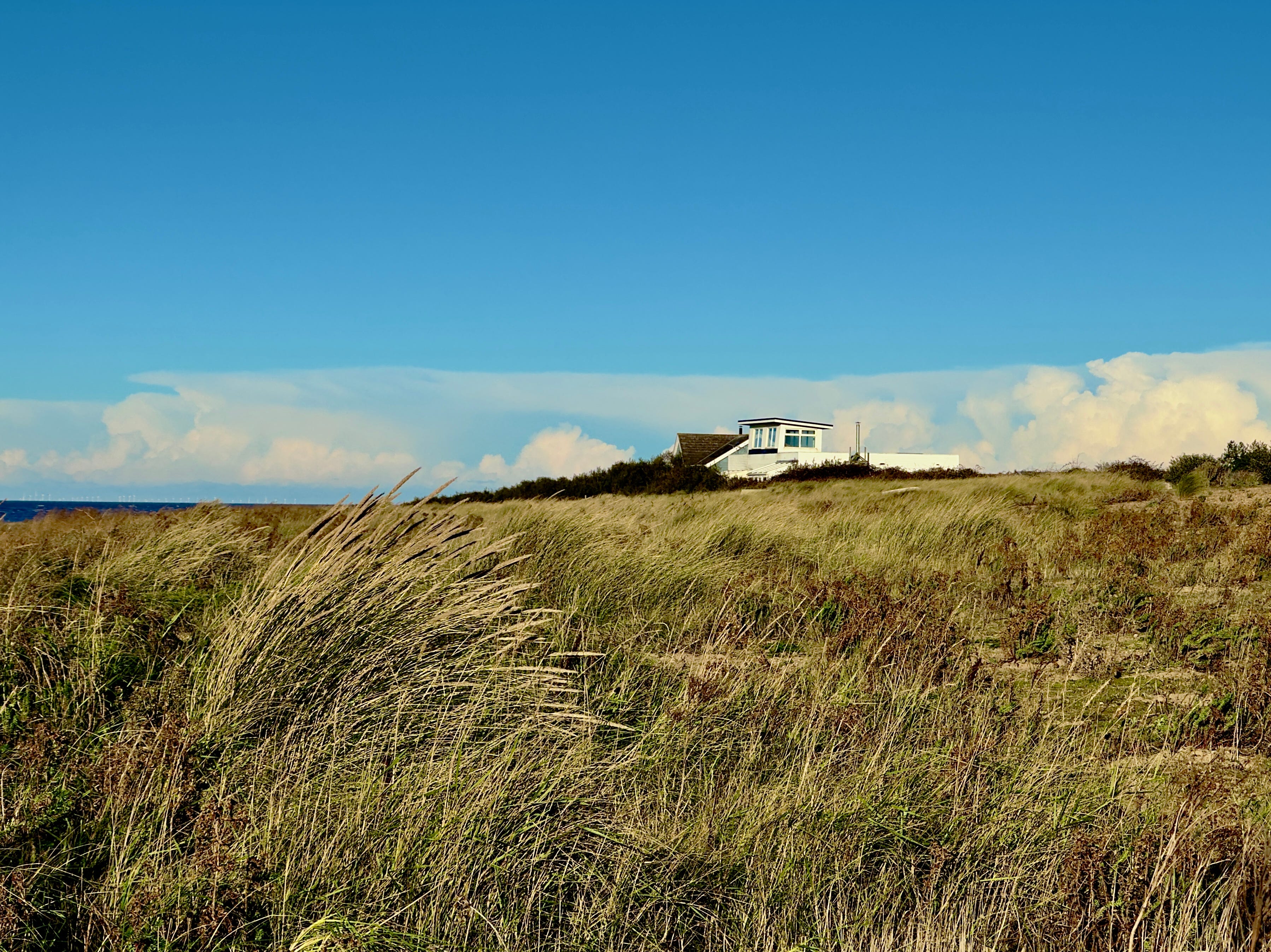
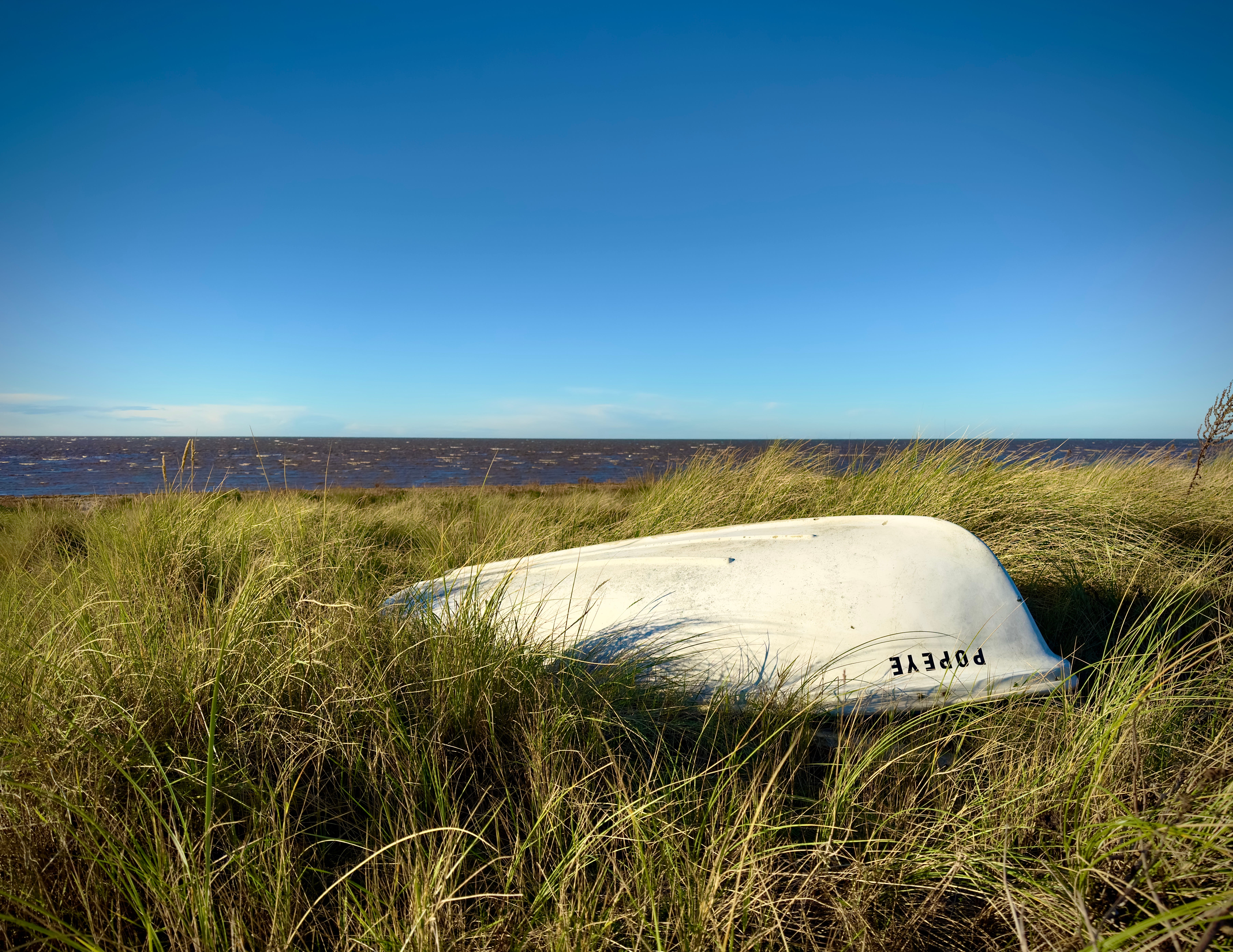
There is something positive to be said about having no mobile phone signal. There would be no messages coming through, no noise to disturb my enjoyment of the coastal landscape or the rather gentle lapping of the waves. Oystercatchers and gulls would be the main source of any noise as I set off down the beach heading towards the ruined pier. A beach of vegetative shingle gave a few warm up opportunities to get myself into shoot mode along the way. It’s also interrupted in part by brief areas of salt marsh and tidal channels linking to the bird reserve behind. A few geese where flying overhead, coming in for winter grazing, there were a few people out walking, but once clear of the caravan park, the path was pretty deserted.
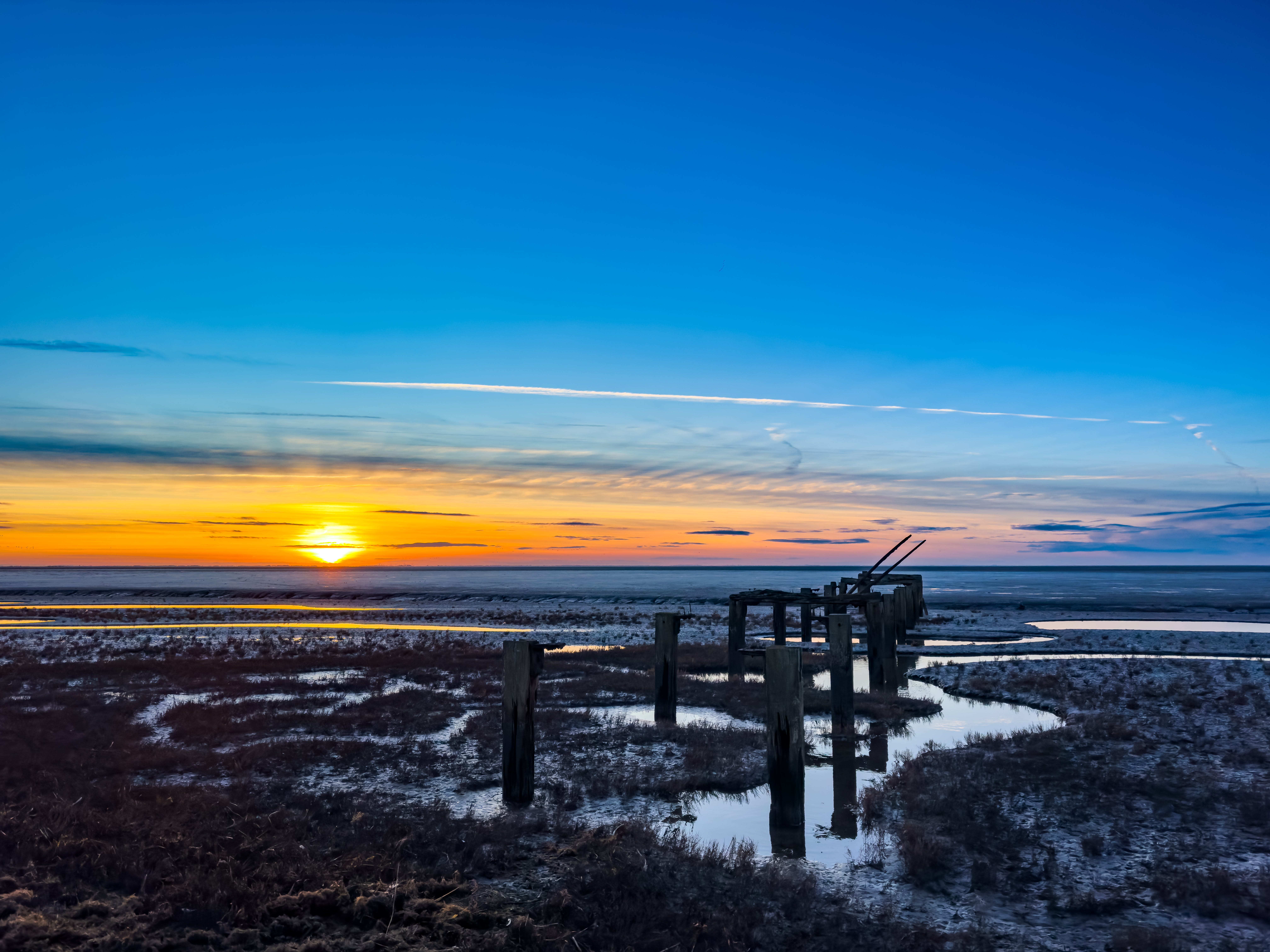
Armed with plenty of water and my favoured bag of Haribo Tangfastics, I made my way down to the much photographed pier to find myself all alone, with some high cloud cover in the distance, and the sun slowly falling towards the land. Looking across The Wash, the sky was promising with some mackerel cloud developing. I use this time to set up my composition, where to place the pier, and use my phone camera as a guide and a recording tool of what I’m trying to achieve on a shoot. The tide was out, the tidal channels had little water in them, but were perfect reflecting the sky and the wooden posts. The temperature was falling, a crisp winter day, but thankfully fairly light winds.
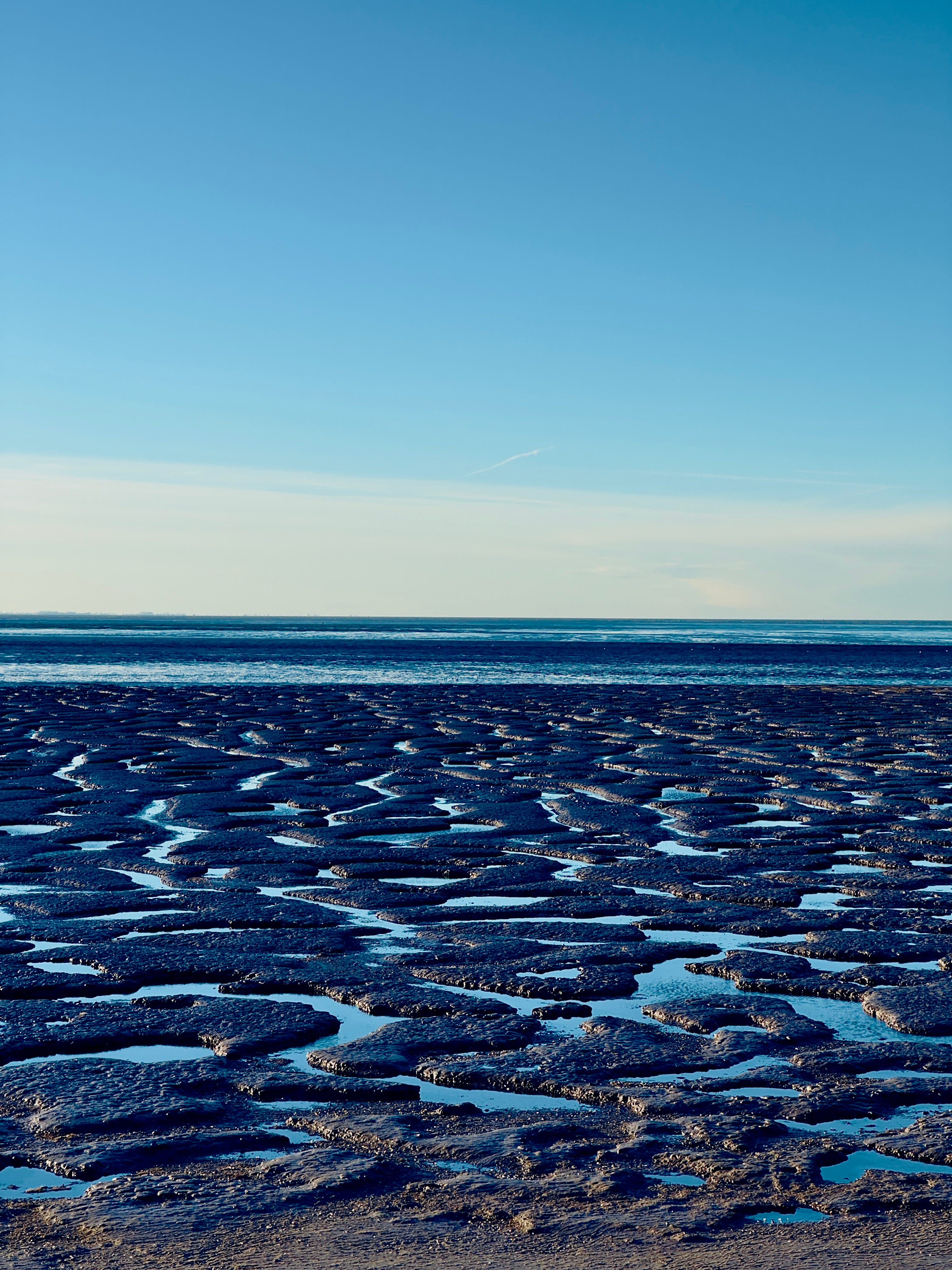
I set up my camera and take a few images just to fine tune my composition and get some idea of the shutter speeds. Left alone to my thoughts, with only a few busy oystercatchers to disturb the peace, I could feel myself noticing the moment, the colours in the sky reflected in the tidal channels, the sun beginning to set and the magic beginning to happen. Setting up the filters to give a short long exposure would ensure that the reflections and colours would be preserved, with enough depth of field to take in the whole pier. I use my phone as a remote trigger and can make adjustments to the shutter speed in the camera’s app, so nothing need touch the camera and cause unnecessary vibrations, that would put the image out of focus.
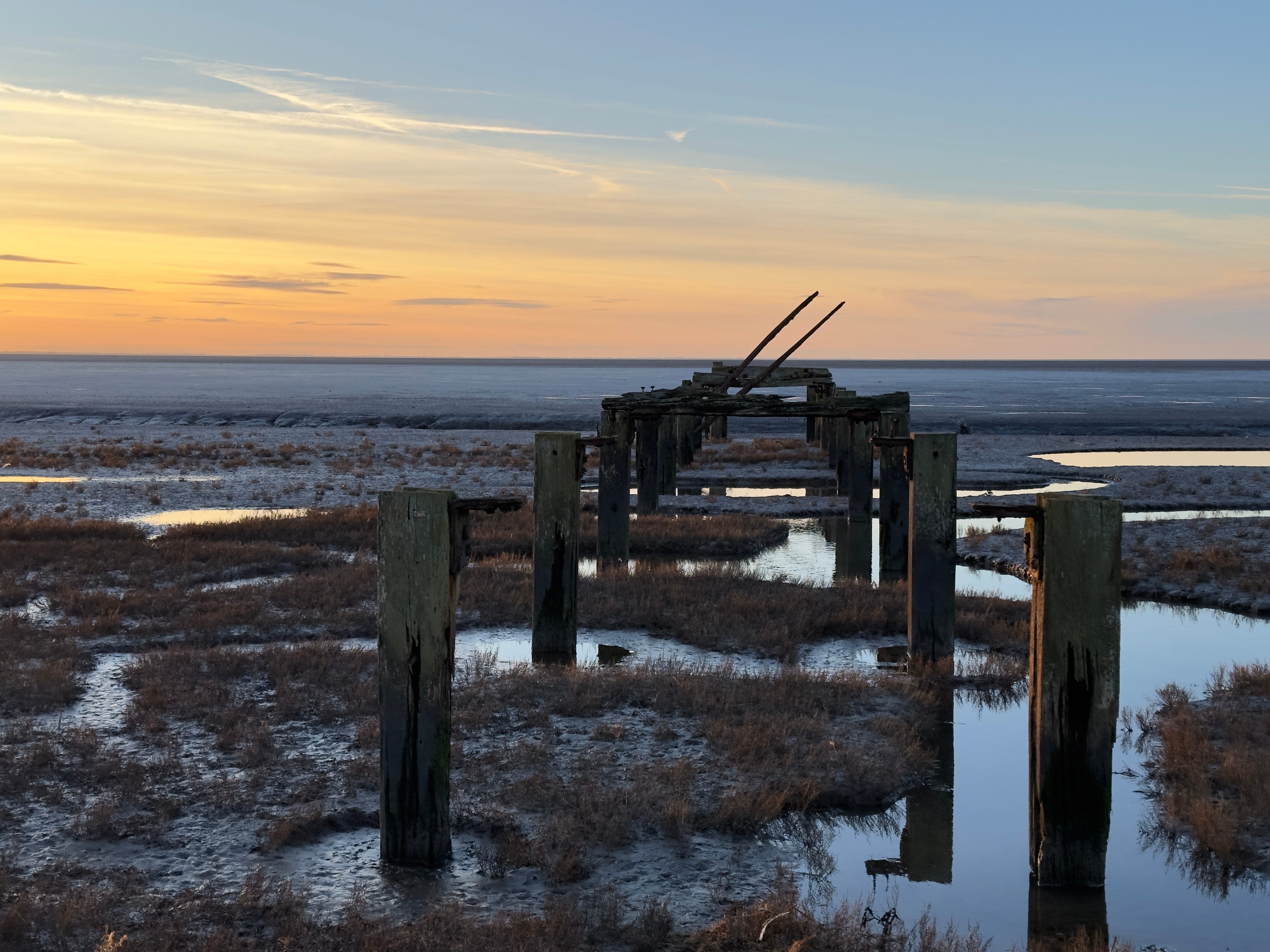
Watching the sky develop that evening was special, the bands of cloud streaking the sun’s rays and the developing pastel colours, from purples, to pinks, to oranges and back to blue was simply a beautiful sight. What had promised much was delivering, though it was getting pretty chilly! Waiting for the right time to get the one image was all the more worth it, despite the cold, my bag of Tangfastics kept me going. Using my phone as the trigger and having set up the focal point of the image, I was able to stand back and enjoy the light show.
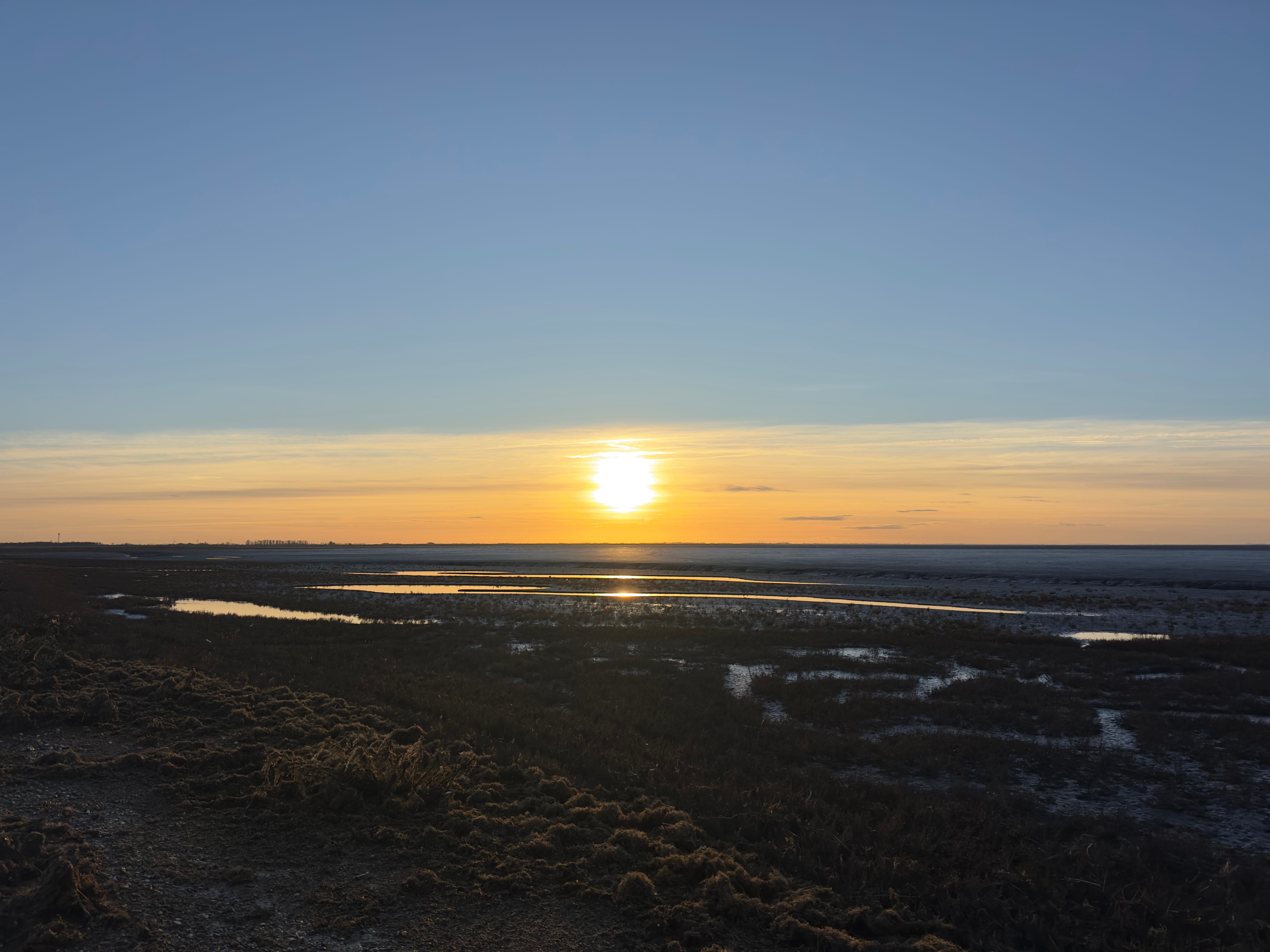
Facing the sunset directly and using a narrow aperture meant that I could balance the light, and as the sun dipped below the high cloud, more colours developed, with a line of orange lighting the landscape in front of me. I shot a couple more images, but it was getting colder by the second, my fingertips almost numb. Knowing I had quite a walk back, I retrieved my camera, only to find that it had been “christened” by one of the oystercatchers! Thankfully, no harm done and all remains in perfect working order!
Walking back as the blue hour developed, I returned to my phone camera to capture the last of the light. Satisfied with my final image, I returned to the car to warm up. Everything heated switched on as the frost started to reform and the last of the daylight disappeared.
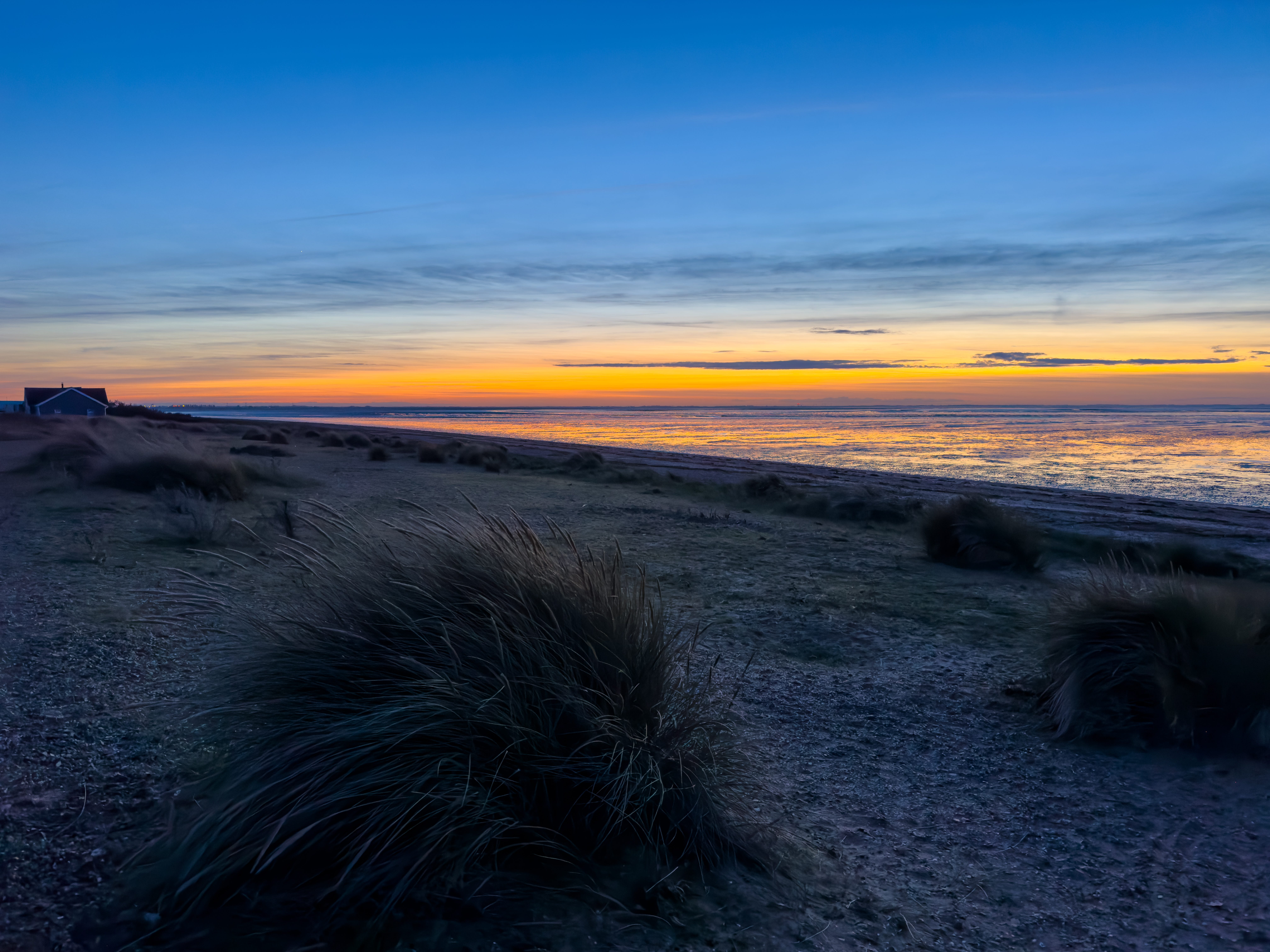
This was one of those occasions where all the conditions aligned, and with a bit of planning, I had successfully created an image that truly captured the moment, the colours and the beauty of a winter sunset.